| Quantity: | |
|---|---|


Cabinet and wardrobe manufacturers often need a panel that sits between two competing requirements: it must be rigid enough to become part of a finished structure, but it should not become unnecessarily heavy or difficult to fabricate.
The three-layer co-extruded WPC foam board addresses this requirement through a composite structure rather than relying on a single uniform layer.
The co-extrusion process forms multiple layers together, creating a board in which the outer layers provide a more rigid and finished surface while the foam core contributes to the overall lightweight structure. Because the layers are formed as part of the extrusion process, the board is designed as an integrated panel rather than simply a decorative film bonded onto a separate structural sheet.
For cabinet and wardrobe manufacturers, this structural approach can be valuable when producing large panels, doors, partitions, side panels and other furniture components. The board can be processed using common fabrication methods, allowing manufacturers to move from sheet stock to finished components without requiring an entirely different production workflow.
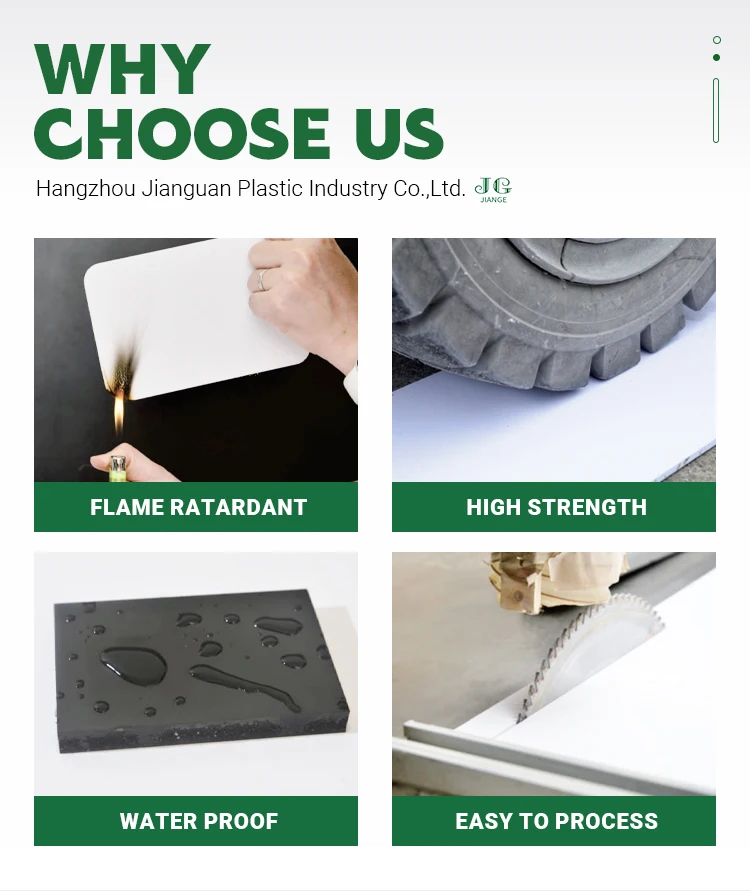
The WPC composition also makes the material relevant to humid interior environments. Resistance to moisture and mold can be particularly useful for kitchen cabinetry, bathroom furniture, storage systems and other applications where conventional wood-based materials require greater protection from humidity.
The defining characteristic of this product is its 3-layer co-extruded construction.
Rather than treating the board as a simple foam sheet, the multi-layer structure is designed to balance:
Surface rigidity
Core weight reduction
Dimensional stability
Surface consistency
Structural performance
For manufacturers, this means the board can be evaluated not only as a decorative material but also as an engineered furniture panel.
The co-extruded structure is particularly relevant when panel stiffness and surface quality both matter in the finished product.
Large cabinet and wardrobe panels can become difficult to move when the material is unnecessarily heavy.
The foam core reduces the amount of solid material required to create panel thickness while maintaining a rigid board format. This can make large panels easier to handle during workshop fabrication, assembly and installation.
For manufacturers producing tall wardrobe doors, cabinet side panels or modular furniture components, easier handling can reduce unnecessary labor during the production process.
Humidity is one of the practical concerns when choosing materials for kitchens, bathrooms and storage furniture.
WPC is inherently more suitable than untreated wood for applications where moisture exposure is a concern. The product is designed to resist moisture and mold, making it appropriate for interior furniture and panels used in humid environments.
This does not mean every installation is automatically waterproof under every condition. Correct edge treatment, joints, fasteners and installation methods still matter. However, the material's moisture-resistant characteristics give manufacturers a useful foundation for cabinetry in demanding interior environments.
A furniture panel needs a predictable surface before it enters the next manufacturing stage.
The co-extruded construction provides a smooth, consistent board surface that can be considered for decorative treatment, fabrication and finishing according to the final product design.
For manufacturers, consistency matters because uneven sheets can create problems during cutting, assembly and finishing. A stable board format makes it easier to plan production around repeatable panel dimensions.
Cabinet doors, wardrobe panels, partitions and decorative components do not necessarily require the same specification.
This WPC foam board is available in:
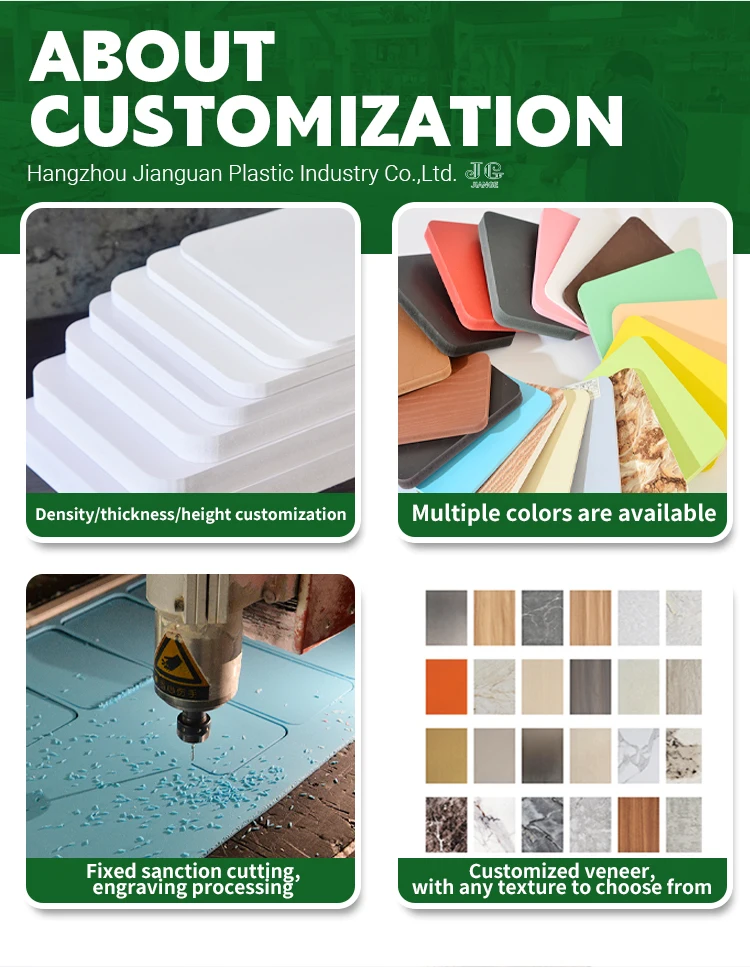
3–30 mm thickness
0.4–0.9 g/cm³ density
1220 × 2440 mm standard size
Customized dimensions are also supported.
This gives purchasing teams the ability to evaluate a specification according to panel dimensions, processing requirements and final furniture construction.
Item | Specification |
|---|---|
Product Type | Rigid Co-Extruded WPC Foam Board |
Structure | 3-Layer Co-Extruded Structure |
Material | WPC |
Thickness | 3–30 mm |
Density | 0.4–0.9 g/cm³ |
Standard Size | 1220 × 2440 mm / 4 × 8 ft |
Color Options | White, Black, Grey, Brown, Red, Yellow, Blue, Green, etc. |
Custom Size | Supported |
Trade Terms | FOB / EXW / CIF |
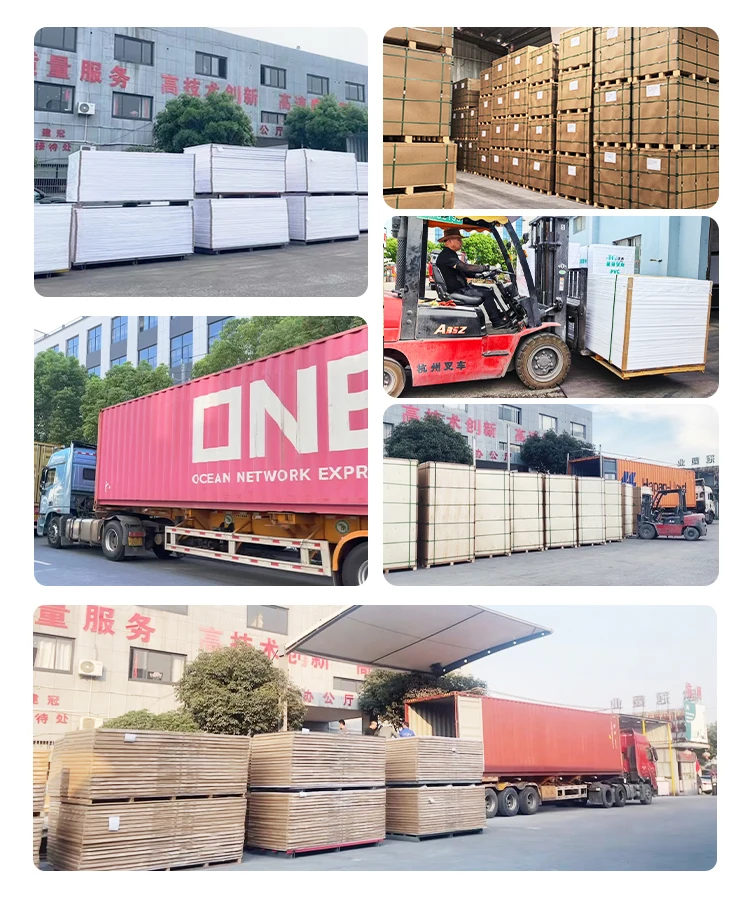
Loading Port | Ningbo, China |
Lead Time | 15–30 days |
MOQ | 200 pcs |
The rigid panel structure and moisture-resistant characteristics make the board suitable for cabinet sides, doors, partitions and decorative kitchen furniture components.
Bathroom environments combine humidity, temperature changes and regular cleaning. WPC foam board is suitable for vanity units, storage cabinets and decorative furniture components where moisture resistance is important.
The lightweight core can be useful when manufacturers are producing large wardrobe panels and want to control panel handling weight without moving to a completely solid board construction.
The sheet format supports cutting and fabrication for modular furniture systems, storage units, partitions and custom interior components.
Beyond cabinetry, the board can be evaluated for wall features, commercial interiors, display furniture and other applications where a rigid, lightweight composite sheet is required.
It is a composite WPC board manufactured using a multi-layer co-extrusion process. This product uses a three-layer structure designed to combine a rigid outer structure with a lightweight foam core.
The multi-layer construction allows the board to balance surface rigidity, structural stability and reduced weight. This makes it useful for cabinet and wardrobe panels where both handling and structural performance matter.
Yes. It is designed for cabinet and furniture applications and is particularly relevant to kitchens where moisture resistance and manageable panel weight are important.
Yes. Wardrobe doors, side panels, partitions and other furniture components can be considered, subject to the selected thickness, density and construction method.
The listed thickness range is 3–30 mm, with customized specifications available.
The listed density range is 0.4–0.9 g/cm³.
The standard size is 1220 × 2440 mm (4 × 8 ft). Customized sizes are supported.
The current product page lists White, Black, Grey, Brown, Red, Yellow, Blue, Green and other colors. Buyers requiring a specific color should confirm customization availability with the manufacturer before ordering.
The current MOQ is 200 pieces, and the stated lead time is 15–30 days, subject to order specifications and production scheduling.